Standardized sanding cell
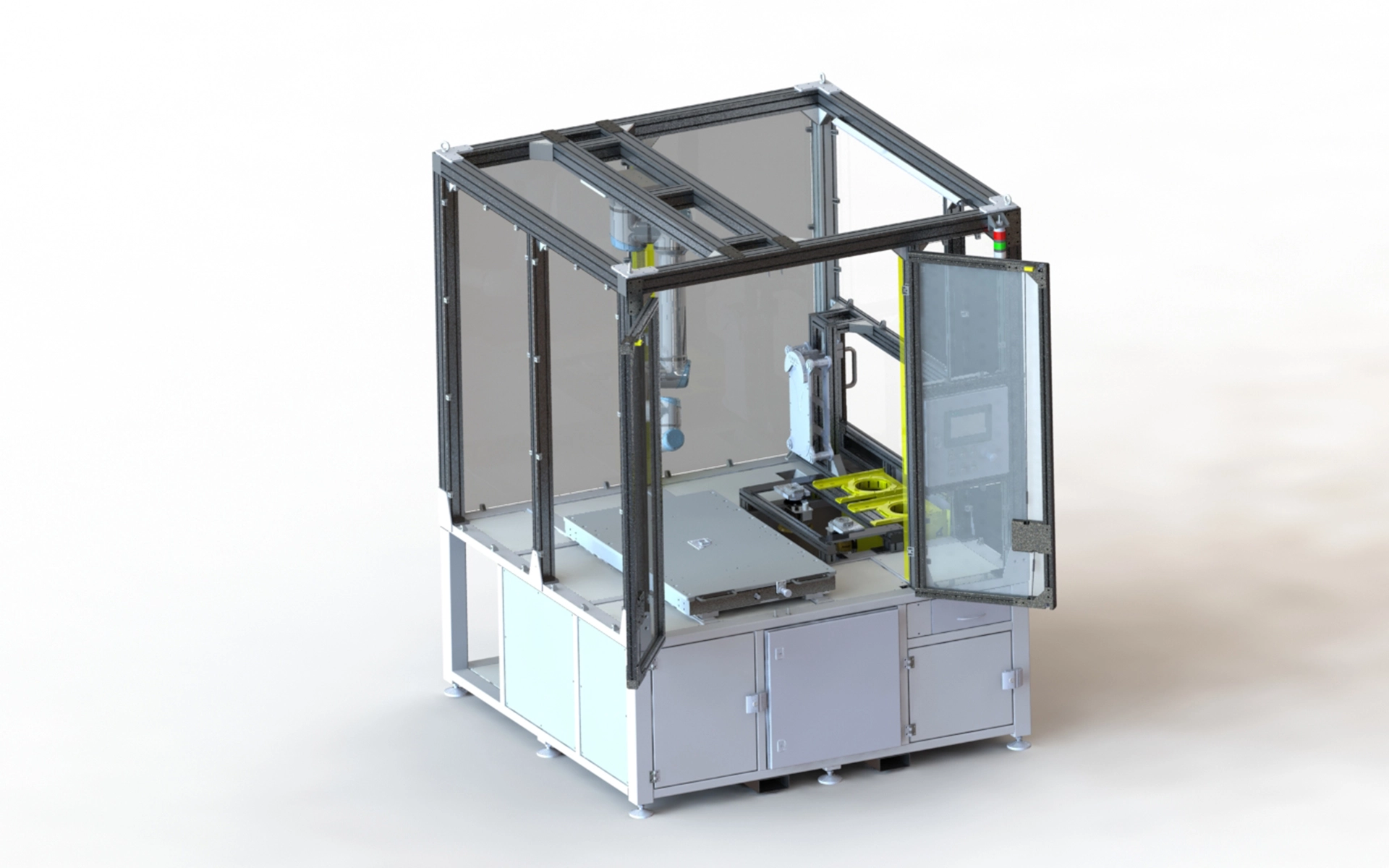
What is SSC?
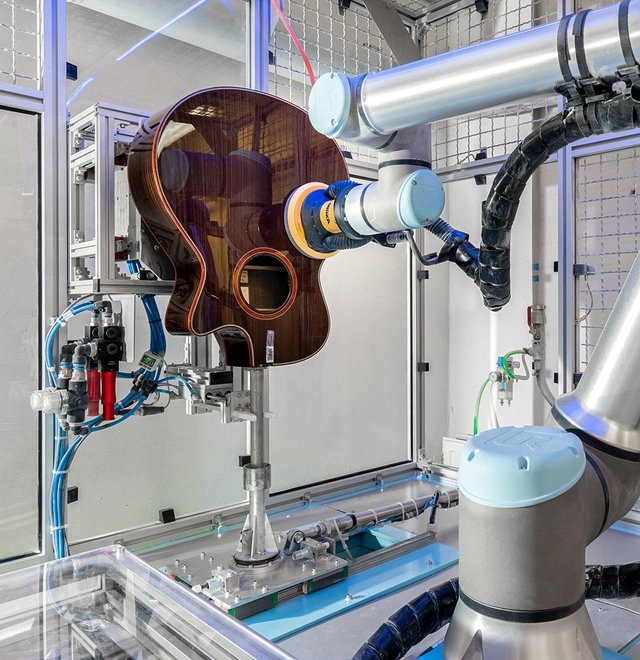
The SSC is a Standardized Grinding Unit and is available in three configuration levels—BASIC, ADVANCE, and MASTER—which differ in complexity or the number of components, and thus in the scope and possibilities for automating the grinding process. For customers who require a worktable size other than the SSC’s standard 1×1 m, we offer the MASTER+ variant, which we can enlarge as needed and equip with a 7th axis, thereby increasing the robot’s reach. Our services also include assessment and assistance in selecting the appropriate configuration based on the customer’s specific requirements.
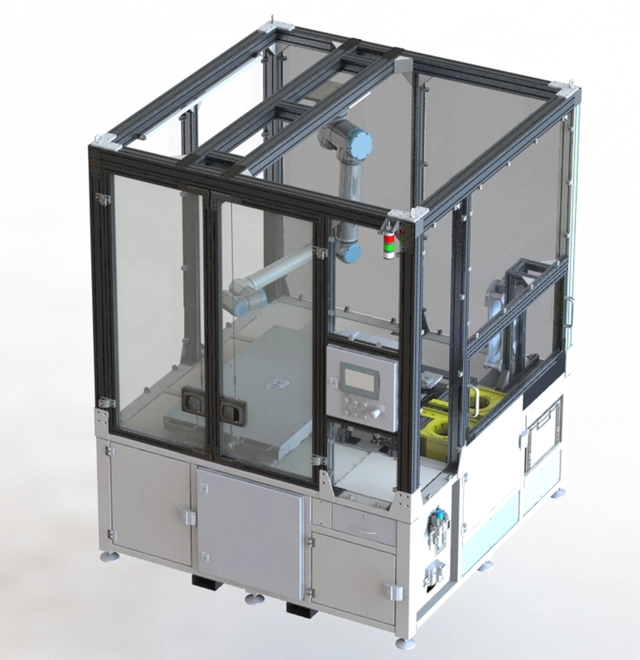
General benefits of SERVIND SSC
- Ready-made solution without the need for development and production
- Deliverable to the customer in a matter of weeks (depending on the customer’s location)
- Space-saving, compact solution
- Thanks to the use of the collaborative robot UNIVERSAL ROBOTS, simple operation, without the need for experienced personnel
- Thanks to the use of the MIRKA robotic sanding head, maximum sanding performance and quality stability
- Mobile -after disconnecting the voltage and media, can be manipulated by forklifts
- Thanks to the closed structure, minimal contamination of the surrounding areas with sanding dust
- Operator and maintenance training is included in the SERVINDdelivery
- The delivery includes setting up the device for 1 type of product (trajectory, quality tuning)
Not included in the package price (Basic, Advance, Master, Master+)
- Fixtures (prefered delivery by SERVIND)
- Transport
- Travel costs
- Trajectory and quality for more than 1 type of product device for 1 type of product (trajectory, quality tuning)
Why automate?
General Reasons for Automation (Sanding)
From our perspective, there are several creative and compelling reasons to develop an automated sanding system using collaborative robots.
- Efficiency and Productivity Automating the sandingprocess increases overall production efficiency. Robots can operate continuously without fatigue, potentially boosting the productivity of your production line.
- Consistent Quality Human work can be affected by fatigue and errors, while a collaborative robot ensures consistent quality and precision in sanding each product thanks to precisely set programs and repeatable accuracy.
- Workplace Safety Sanding is a demanding and potentially dangerous process. Automation reduces the need for manual intervention, thus increasing workplace safety, reducing the risk of occupational injuries, and ensuring employee health protection.
- Flexibility in Production Collaborative robots are designed to be flexible and easily programmable for various tasks. Manufacturers can quickly adapt production to current market needs and demands.
- Sustainability and Environmental Impact Automation can contribute to reducing material waste as robots use the optimal amount of materials and energy for each task. This not only conserves resources but also minimizes the environmental impact of production.
- Return on Investment (ROI) Although the initial investment in automation may be higher, long-term savings in labor, increased productivity, and reduced maintenance costs often result in a quick return on investment.
- Customized Solutions Collaborative robots can be tailored to specific customer needs, ensuring that the solution is customized to meet the unique requirements of their production.
Turnkey solution challenge
Automated robotic device developed according to the wishes or needs “turnkey solution”, is capable of meeting even the most complex requirements, specifications and processes of the specific customer, however, due to the comprehensive nessof the entire process of development production and commissioning of the equipment, it is not a universal and ideal solutionfor every situation. In addition, even complex cases can sometimes have a simple solution.
Step by step
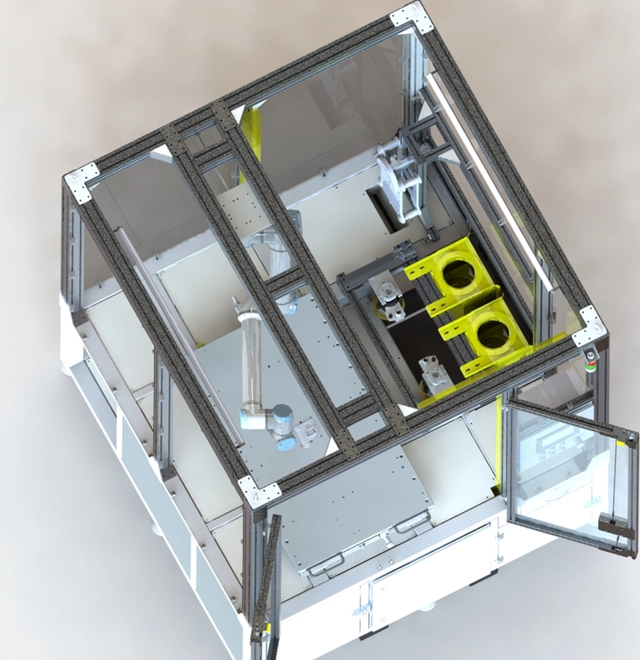
As mentioned, due to the complexity of this process, a turnkey solution is not suitable for all cases. The answer may be the use of SERVIND Standardized Sanding Cell (SSC), thanks to which we will shorten the entire process and go straight to point no.: 6. Transport.

Our Interesting Projects
Take a look at some interesting automation projects in which we played a significant role.
 Česky
Česky Slovensky